
A sleek and user-oriented application specially designed to help you learn and remember important information using multimedia flashcards. #Learning assistant #Study flashcards #Test knowledge #Flashcard #Study #Learn
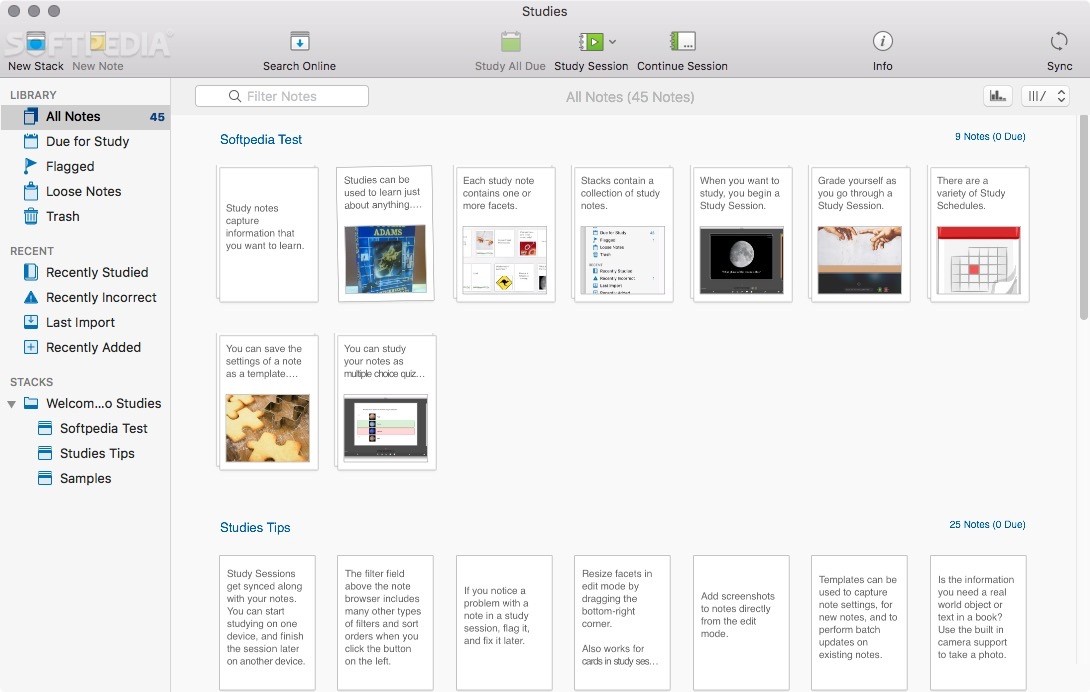
Studies (formerly known as Mental Case) is a well-designed and intuitive macOS application that makes it easy for you to learn, regardless of the type of information you need to remember.
With Studies' help you can learn anything from simple day-to-day facts or more important information for various exams and tests.
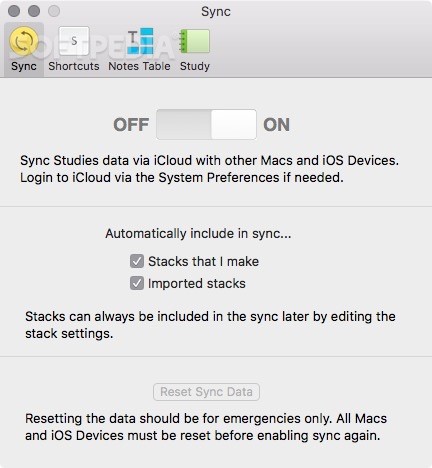
In addition to the desktop application, Studies also comes with an iOS app that enables you to synchronize data between devices with ease.
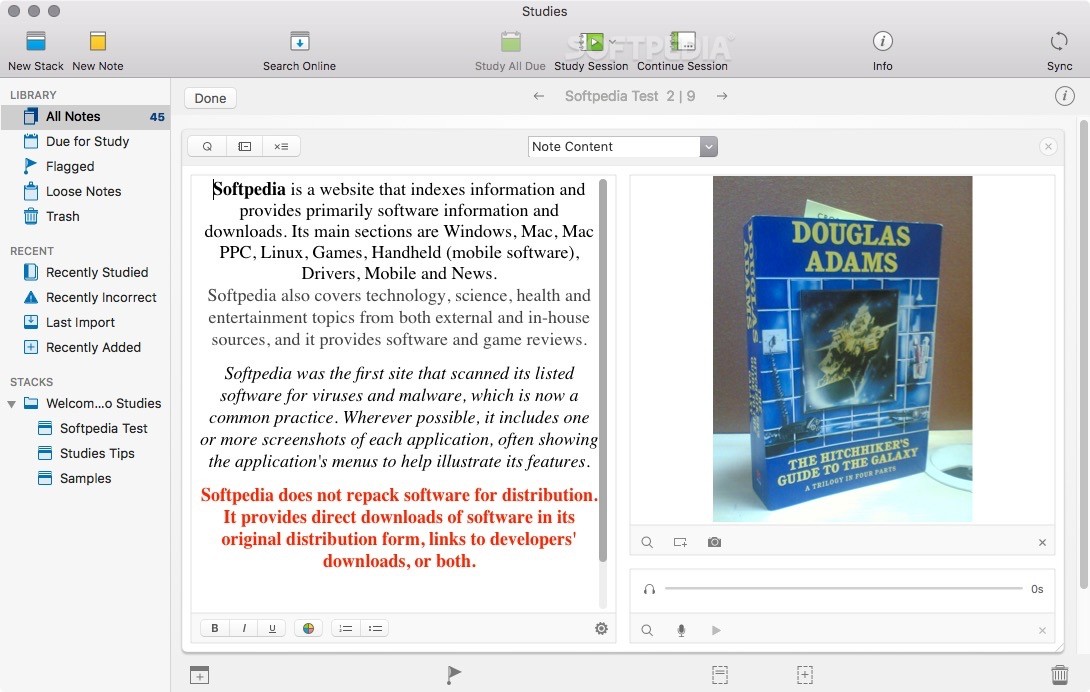
To start using Studies you first need to enter the information you need to study in the form of brief mental notes.
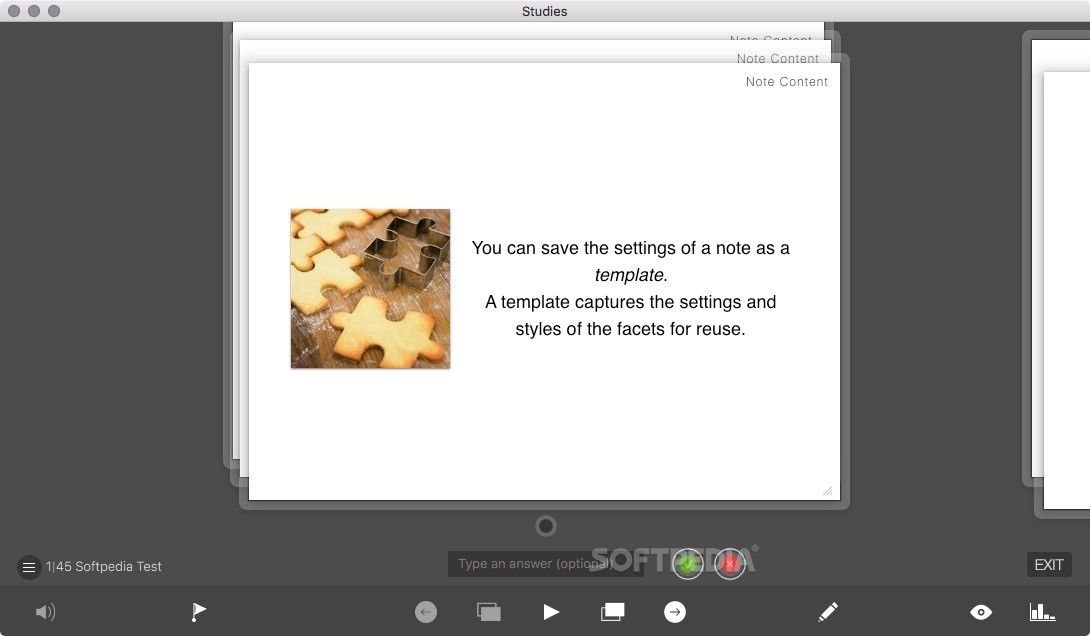
These notes could contain text, images, audio and even short videos. When all your flashcards are ready, you can start studying them in beautifully presented slideshows
What is more, Studies offers you direct access to FlashcardExchange.com and Quizlet.com from where you can grab flash cards on various topics. You also have the option to share your notes with other users via Mail or iCloud.
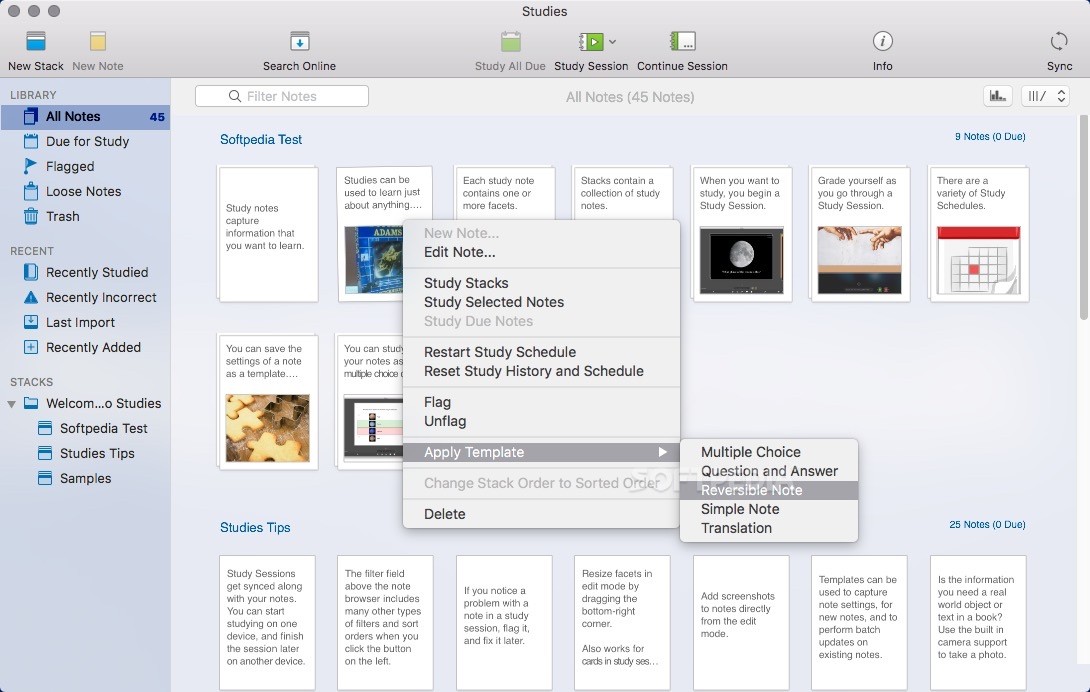
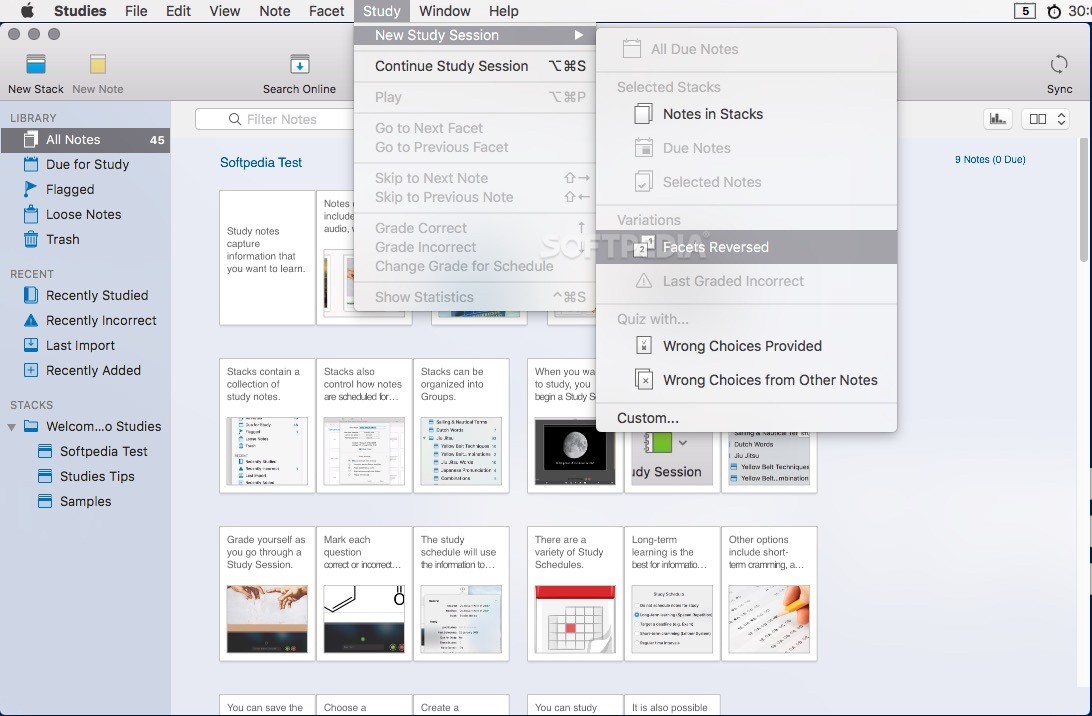
From Studies' main window you can easily organize your mental notes and group them together in multiple stacks. The 3D browser makes it easy for you to browse through your notes, filter and move them between stacks.
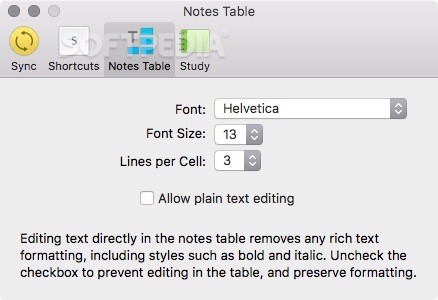
Moreover, Studies acts as a learning hub that helps you keep your mental notes organized and synchronized across multiple Macs and iOS devices.
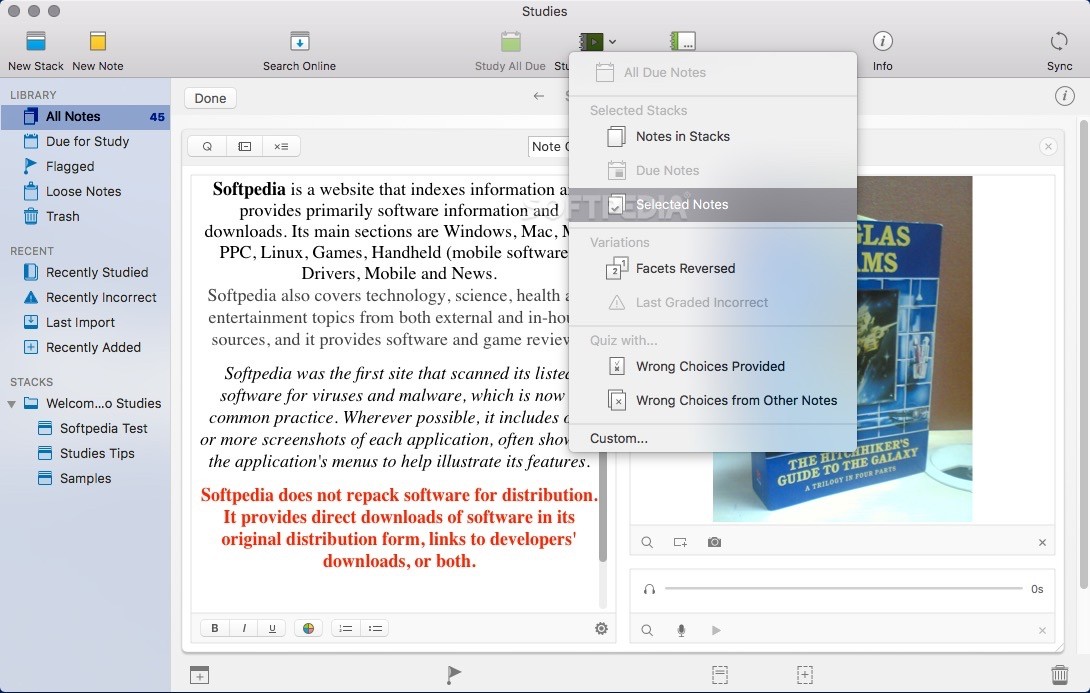
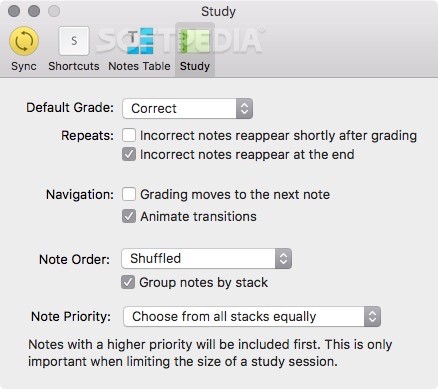
Beside organizing your notes, Studies is also capable to schedule them and gather together the notes you most need to study.
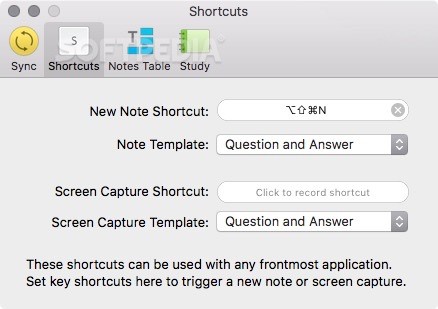
Thanks to the built-in screen grabber you can make notes with all sort of information present on your Mac’s desktop. On top of that, you have the option to use your Mac’s webcam to take pictures of various materials you might need to study.
What's new in Studies 1.8.7:
- Minor bug fixes
Studies 1.8.7
add to watchlist add to download basket send us an update REPORT- runs on:
- macOS 10.15 or later (Universal Binary)
- file size:
- 27.3 MB
- filename:
- Studies.zip
- main category:
- Educational
- developer:
- visit homepage
7-Zip
Microsoft Teams
IrfanView
4k Video Downloader

ShareX
Zoom Client

calibre
Bitdefender Antivirus Free

paint.net
Windows Sandbox Launcher
- Bitdefender Antivirus Free
- paint.net
- Windows Sandbox Launcher
- 7-Zip
- Microsoft Teams
- IrfanView
- 4k Video Downloader
- ShareX
- Zoom Client
- calibre