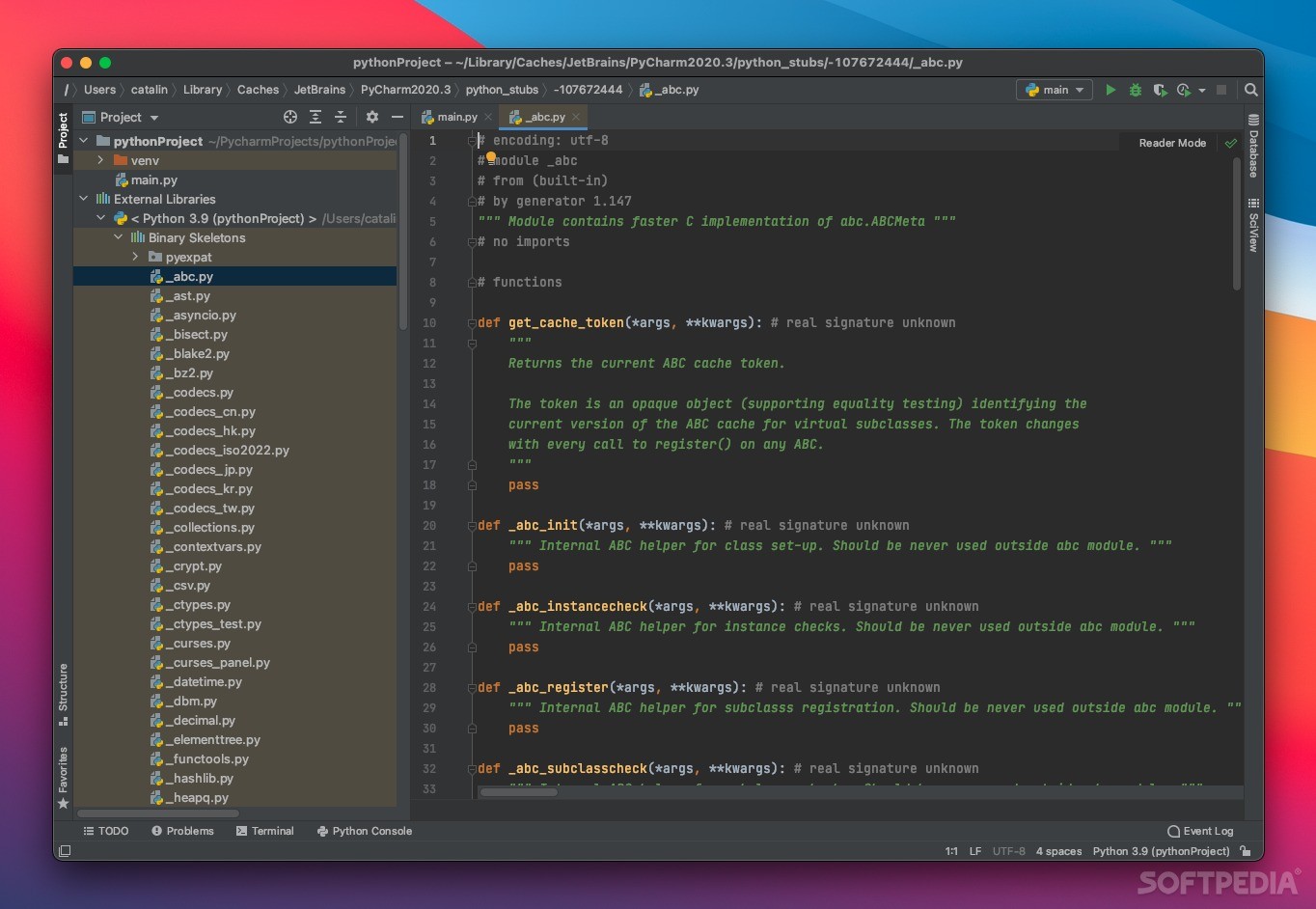
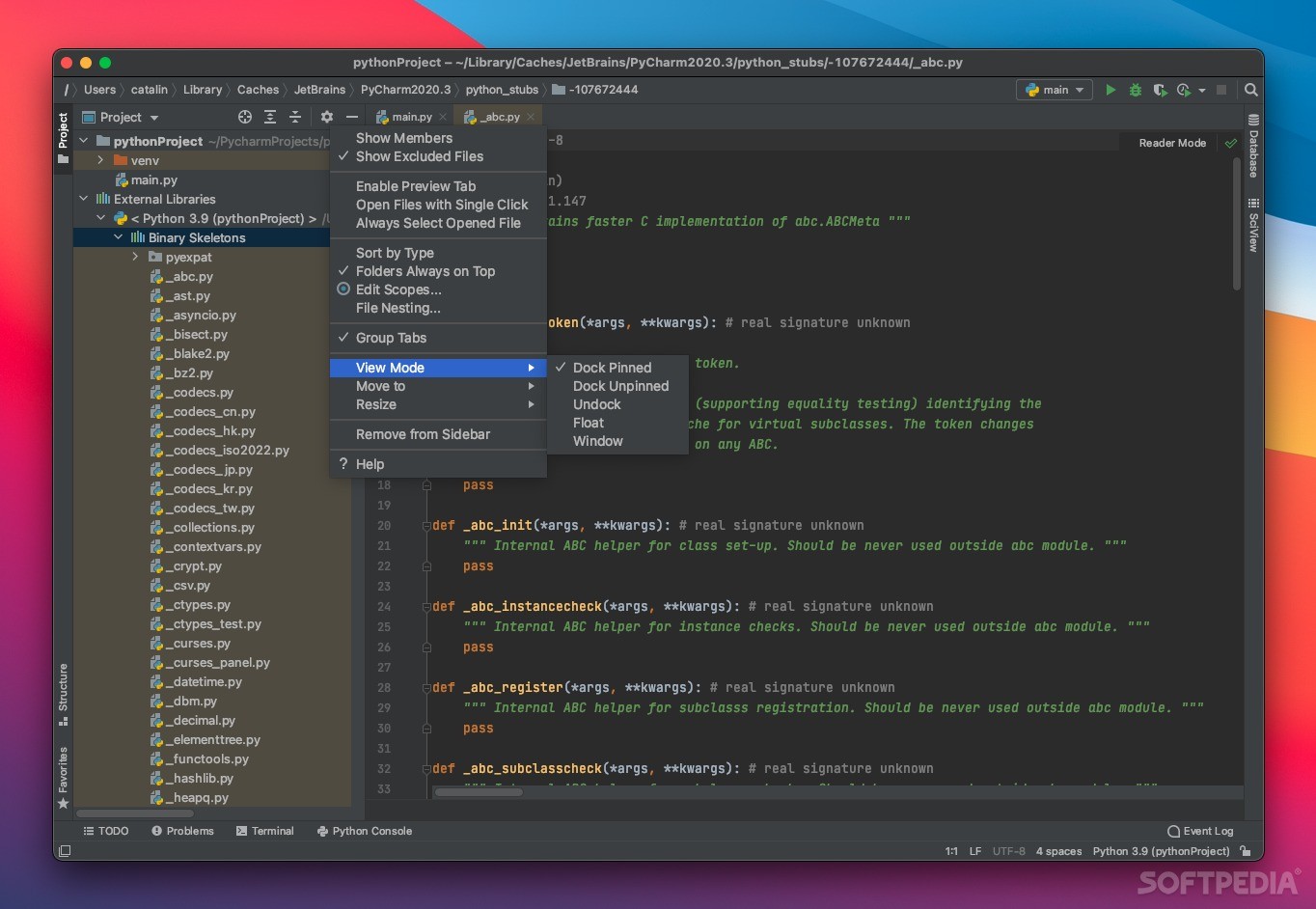
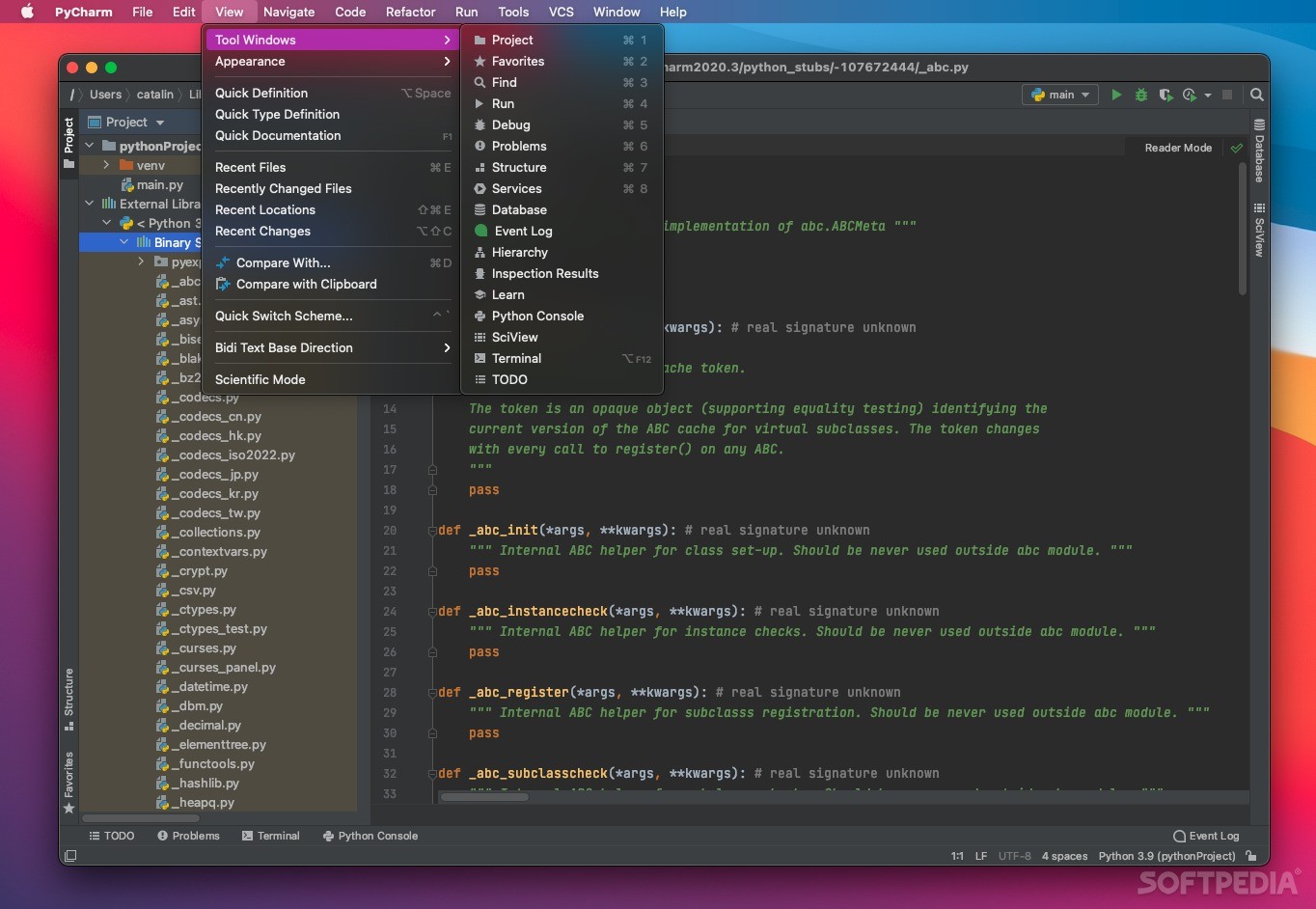
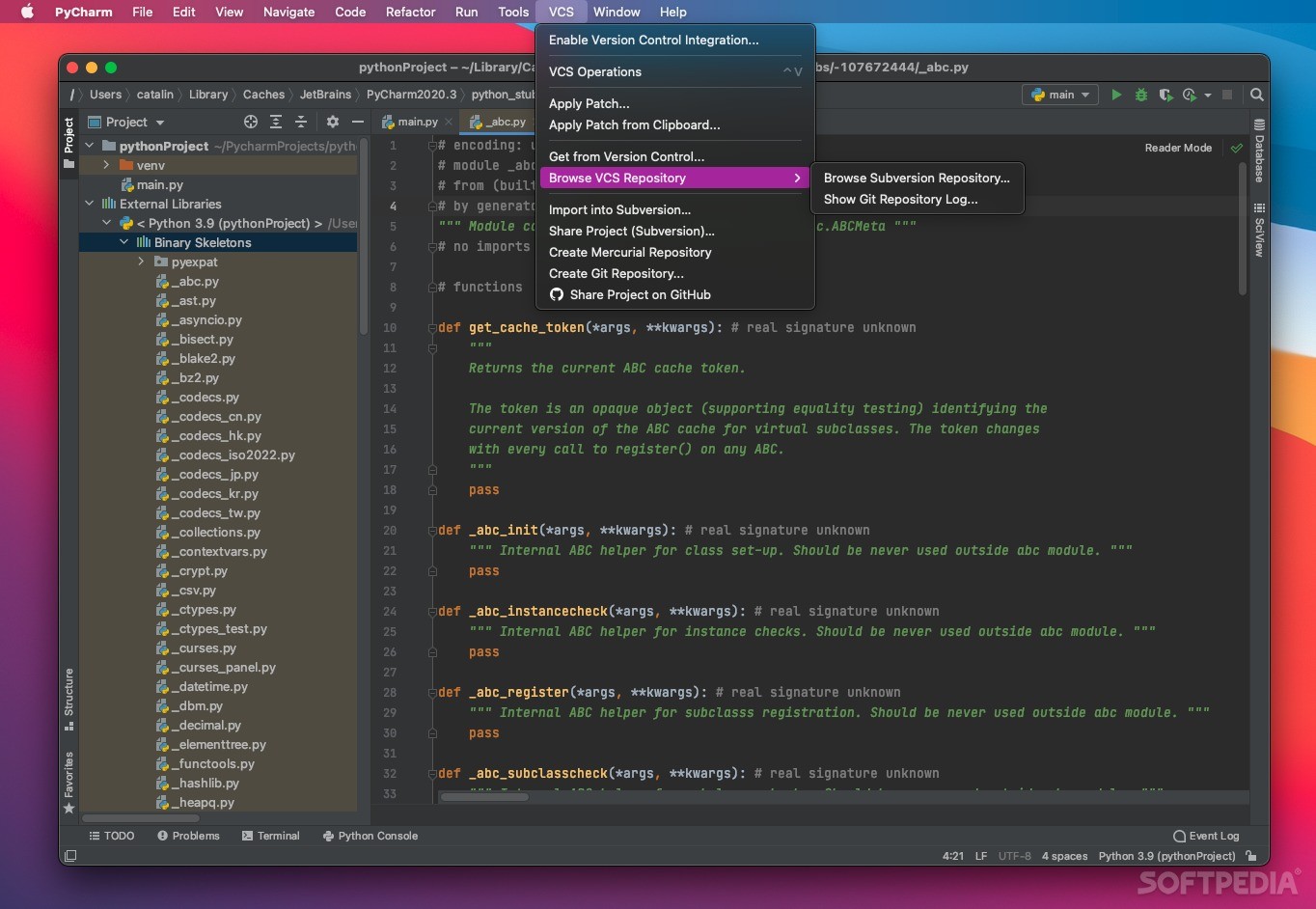
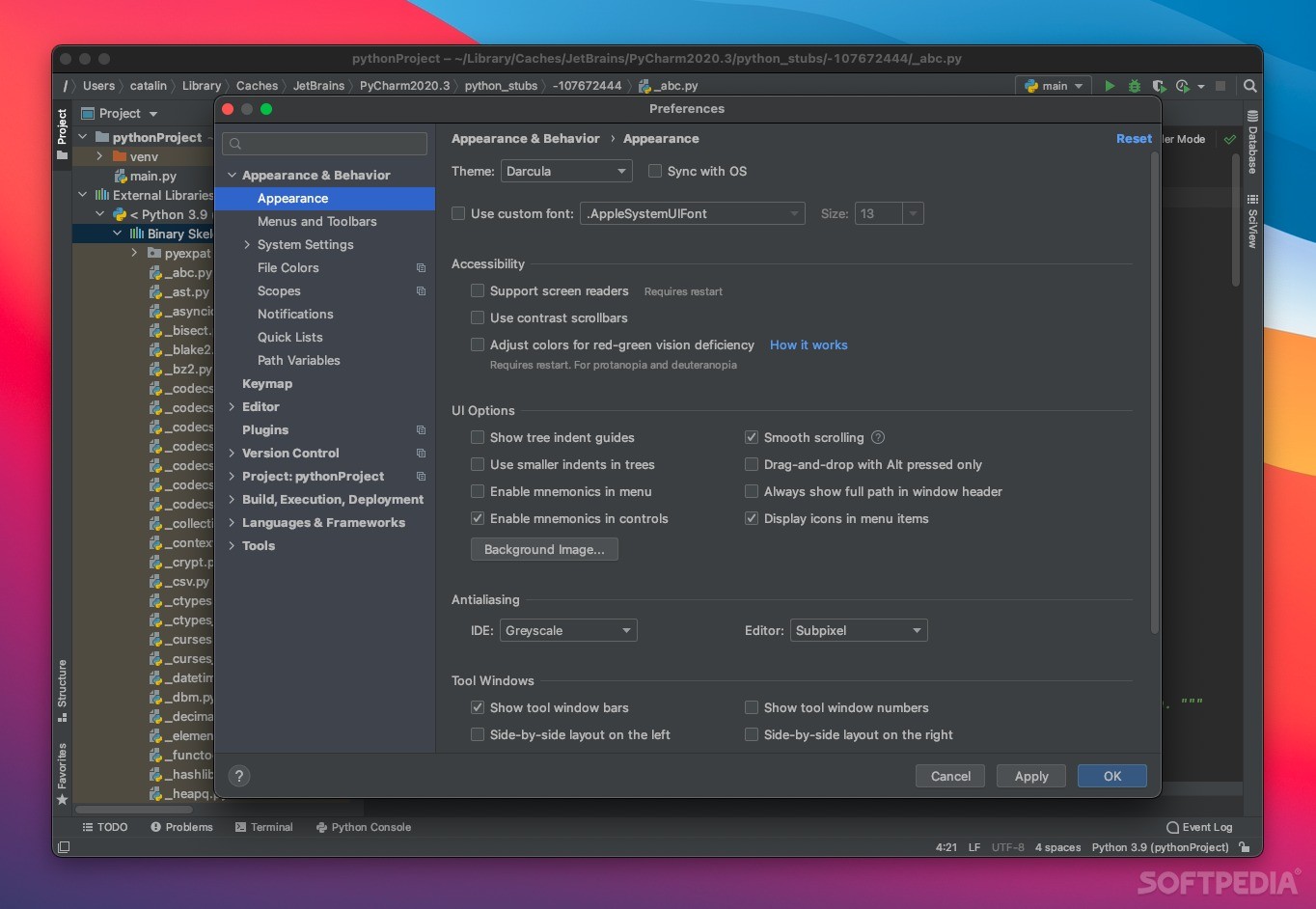
PyCharm is a simple to use IDE (Integrated Development Environment) built on top of the IntelliJ Platform and tailored for Python development.
Here are some key features of "PyCharm":
Python Code Editor:
Intelligent Code Editor:
· Syntax highlighting — customizable editor colors for Python code and Django templates. Several predefined color themes.
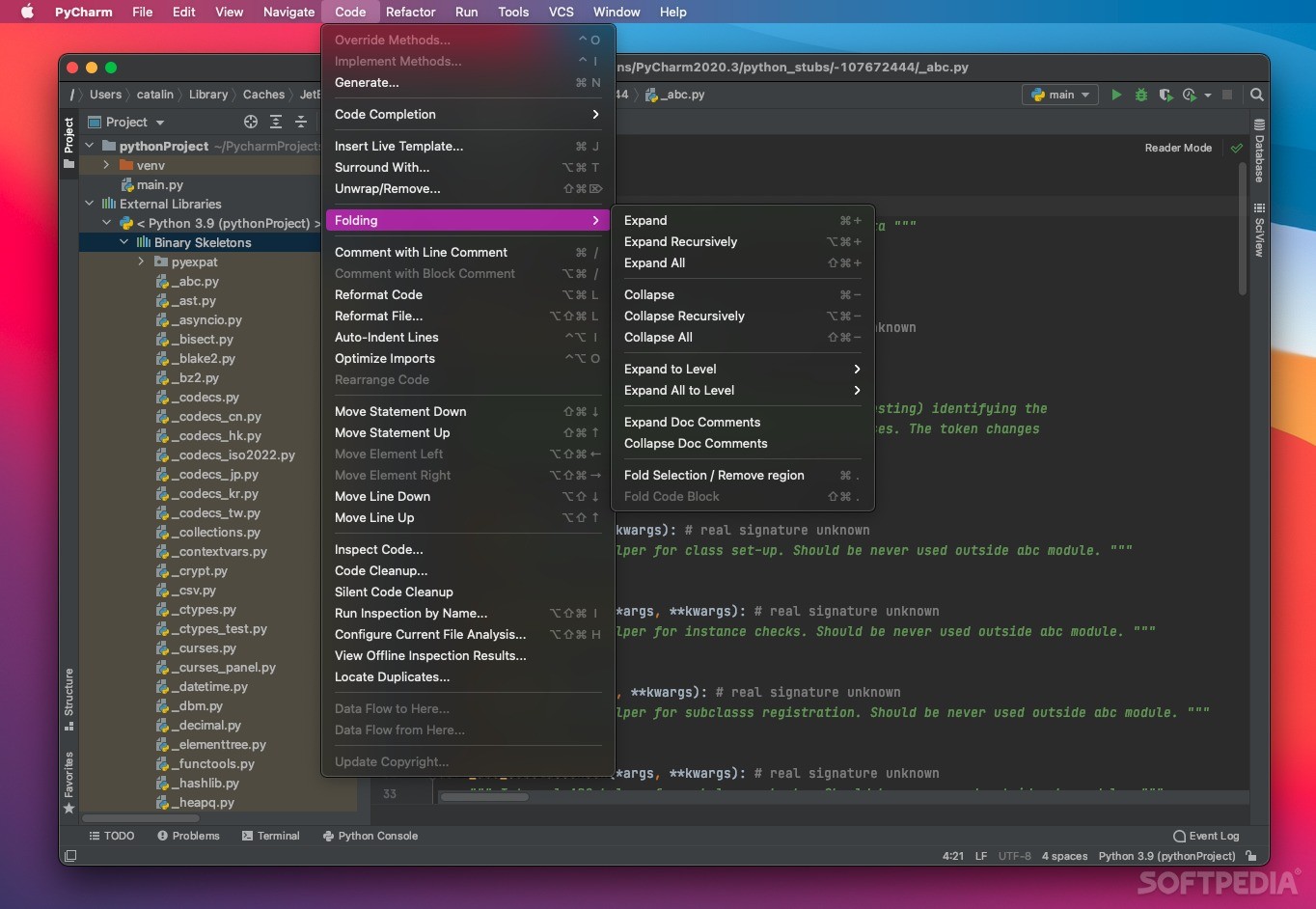
· Auto-Indentation and code formatting — automatic indents inserting on new line. Indents verification and code re-formatting according to project code-style settings.
· Code completion for keywords, classes, variables, etc. as you type or via Ctrl+Space. Editor suggestions are context-aware and suggest most appropriate options.
· Line and block commenting — single keystroke to comment/uncomment current line or selection
· On-the-fly error highlighting — errors are shown as you type. Integrated spell-checker verifies your identifiers and comments for misspellings.
· Quick definition / documentation view — see the object definition or documentation in-place without losing your context
· Code snippets — save time using advanced customizable and parametrized code templates and snippets.
· Code folding, auto-insertion of braces, brackets & quotes, Matching brace/bracket highlighting, etc.
Code Analysis:
· Numerous code inspections verify Python code as you type and also allow to inspect whole project for possible errors or code smells.
· Quick-fixes for most inspections make it easy to fix or improve the code instantly. Alt+Enter shows appropriate options for each inspection.
Easy Code Navigation and Search:
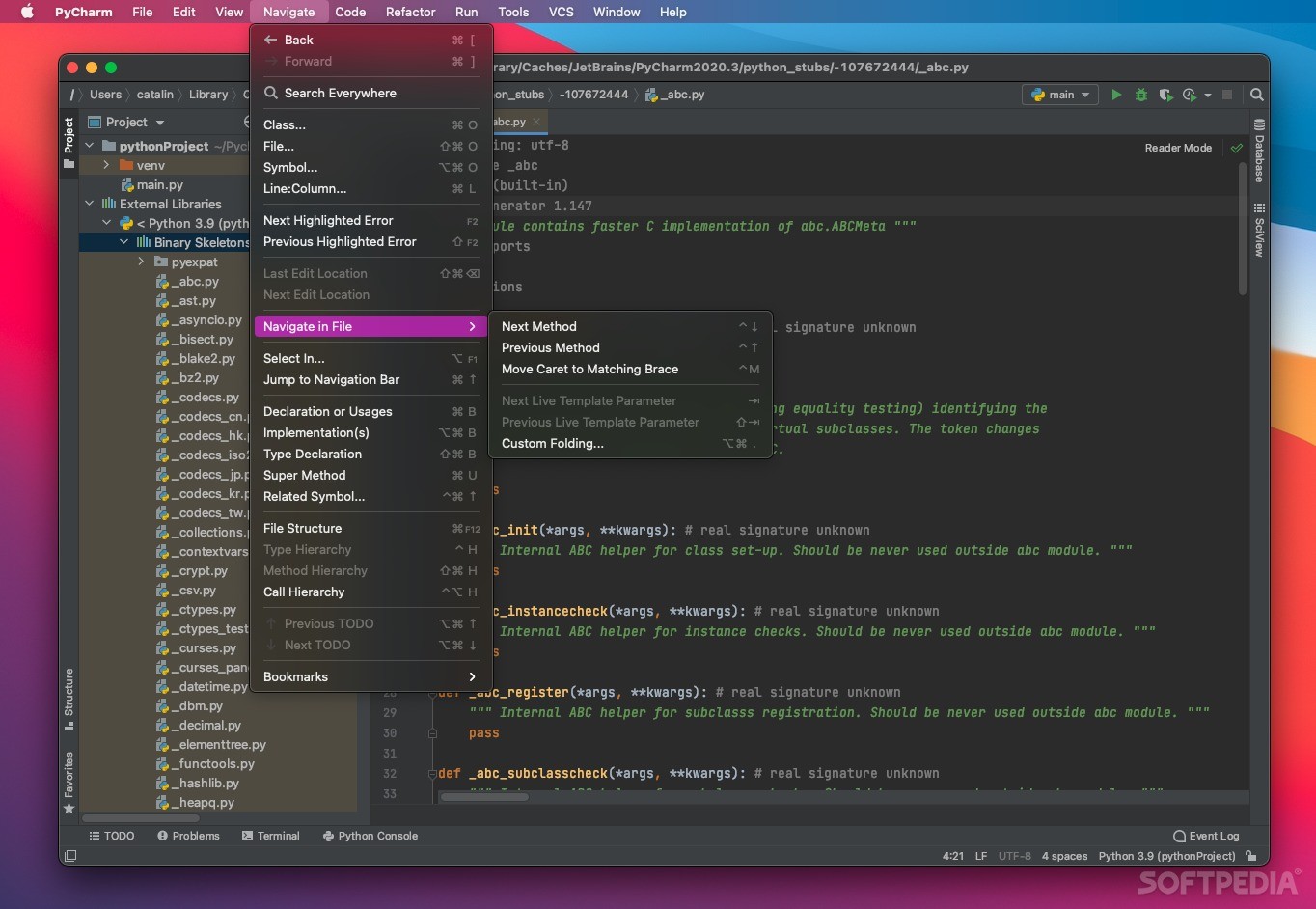
· Go to class / file / symbol — crucial operations for fast project navigation. Use wild-cards and abbreviations to locate needed items faster,
· Go to declaration — when invoked from a reference, opens the corresponding file and navigates to the symbol declaration.
· Find Usages — helps you locate usages of any symbol (e.g., class, method, field, etc.) in your code, in the current file or in the whole project.
Python Refactorings:
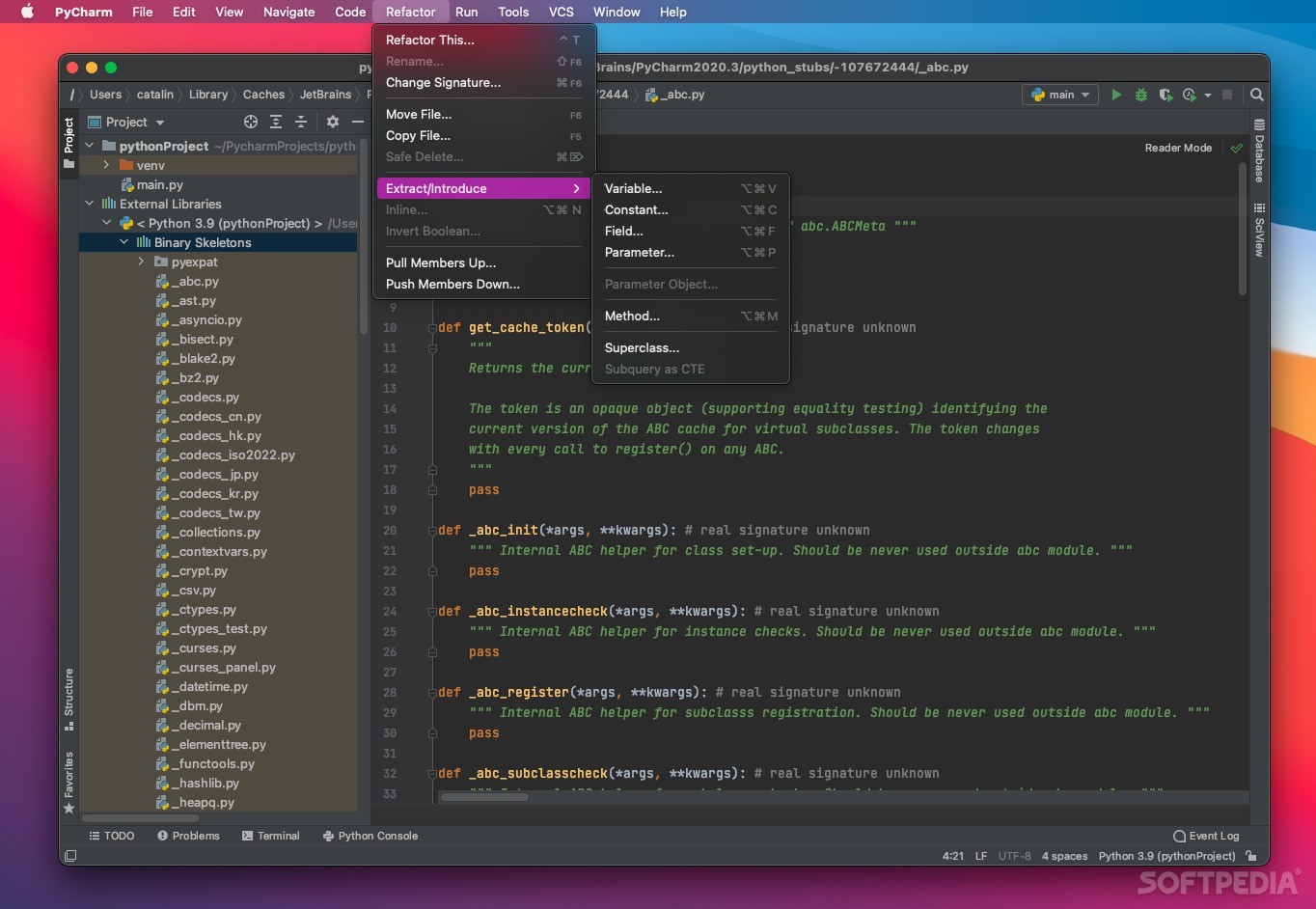
· Rename refactoring allows to perform global code changes safely and instantly. Local changes within a file are performed in-place. Refactorings work in plain Python and Django projects.
· Use Introduce Variable/Field/Constant and Inline Local for improving the code structure within a method, Extract Method to break up longer methods, Extract Superclass, Push Up, Pull Down and Move to move the methods and classes.
Django Templates Editing:
· While working with Django projects you can use all standard editor actions provided by JetBrains IDEs and rely on appropriate assistance, starting from syntax/error highlighting to advanced refactorings.
· Code completion works for Django tags, filters, template variables and parameters passed from view methods.
· Quick documentation lookup shows information for tags and filters.
· Inspections verify you code for duplicate block names, tags open-close structure, unresolved template references, etc.
· Time-saving editor actions include: automatic code formatting and indentation, code snippets/live templates, brackets and quotes autoclosing, code commenting and "Surround with tag" options.
Django IDE + JavaScript, HTML:
Django-Specific Code and Files:
· Code insight for Django models and fields: navigation, autocompletion with type inference.
· Special coding assistance within standard files: urls.py and settings.py: files, folders, view methods, templates navigation and autocompletion, regexp injection and highlighting. Intentions to create view and template from usage.
· Internationalization (i18n) options allow quick extraction of strings to resource bundles with automatic code update. Easy navigation is available between string references and its value.
Other Templating Languages:
· In addition to Django templates, Mako and Jinja2 can be used for any project with syntax highlighting, code completion, formatting, quick navigation and Structure view.
Django Templates Debugging:
· PyCharm allows setting breakpoints inside Django templates. Stop your web application right where you need,
· for a detailed code step through.
Debugger, Google App Engine, etc:
Run, Debug & Test your Python/Django:
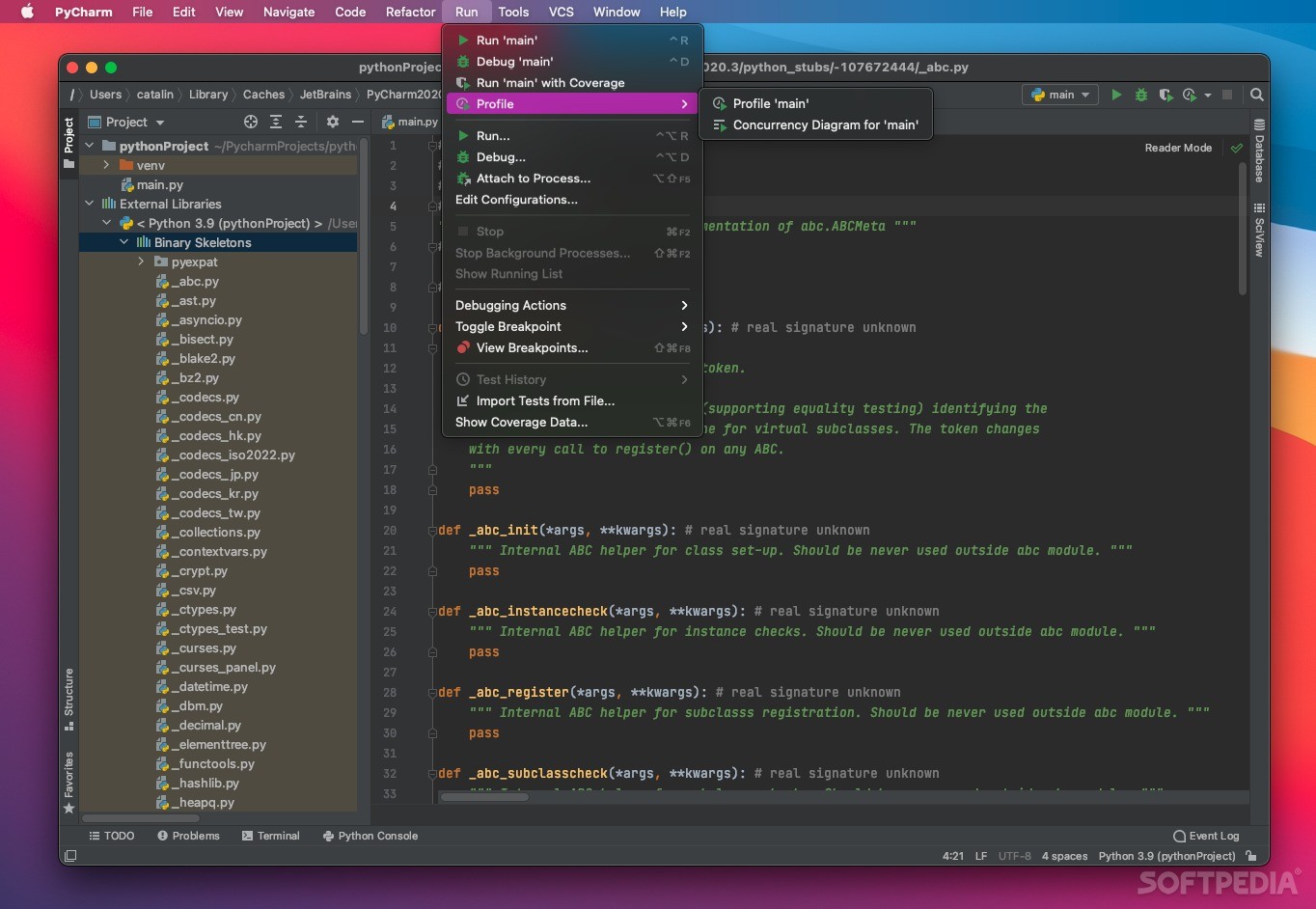
· As an Integrated Development Environment (IDE) PyCharm provides functions for complete development cycle, including ability to run applications from IDE, unit testing support and integrated graphical debugger.
Google App Engine Python Development:
· Develop applications for Google App Engine and delegate routine deployment tasks to the IDE. Create your app, run it and deploy it to the App Engine server without leaving PyCharm. Enjoy code completion and error highlighting in GQL queries and in YAML configuration files.
Python Desktop Development:
· Desktop development support with wxPython, PyQt, PyGTK
Supported Environments:
· Python 2.x or 3.x, Jython, IronPython and PyPy.
Requirements:
· Python 2.4 or higher, Jython, PyPy or IronPython
· JDK 6
· 1 GB RAM minimum
· 2 GB RAM recommended
Limitations:
· 30 days trial
What's New in This Release: [ read full changelog ]
PyCharm 2.5 adds a set of very important features with regards to working with Python interpreters and application packaging:
· Remote interpreters - full integration with Python interpreters running on remote hosts is ensured.
· Added ability to browse and install packages from PyPI.
· The new version provides virtualenv integration including virtualenvs creation and auto-detection of existing ones.
· The IDE now offers a simple UI for creating new setup.py files and for running setup.py tasks. Start typing task name and PyCharm shows you what you need.
· PyCharm is now capable of reading dependencies from setup.py or requirements.txt. Having all packages in place let's you enjoy all outstanding code completion and code navigation abilities of PyCharm.
· New packaging-aware inspections are added with a quick-fix to automatically install an unresolved package specified in import.
· SVN: Enjoy the new features and performance of the latest Subversion with the best GUI client available.
· Git: New, ea...