
An open source object-oriented logic programming language that can use Prolog implementations and comes with an extensive documentation #Logic programming language #Prolog implementation #Back-end compiler #Programming language #Prolog #Compiler
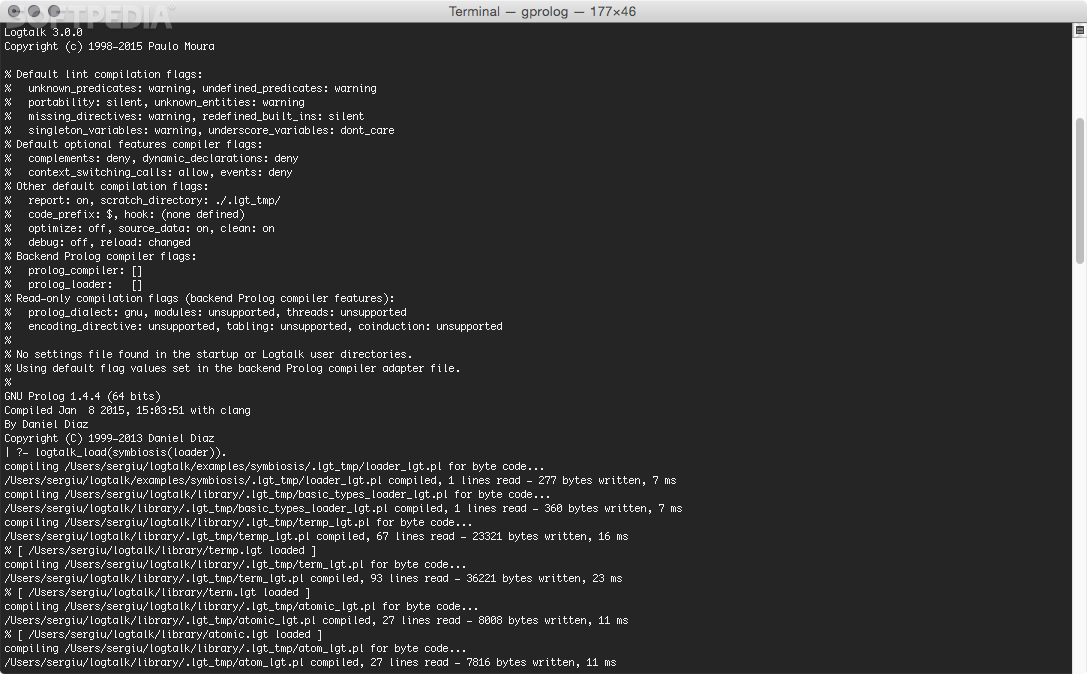
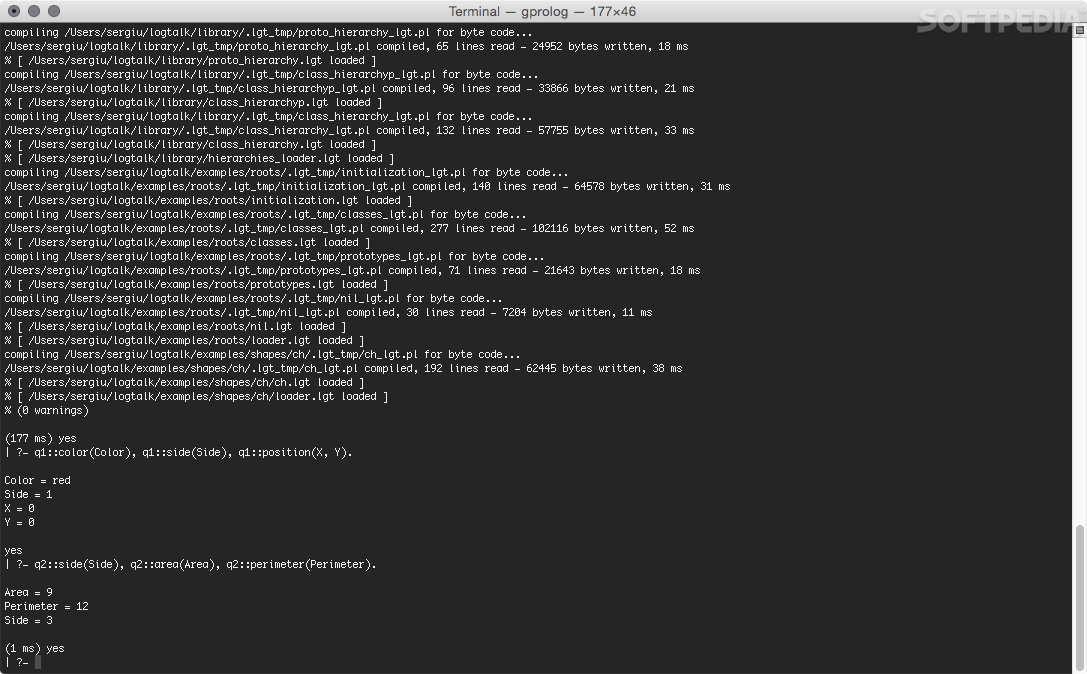
Based on the Prolog programming language, Logtalk can work with most Prolog back-end compilers, while extending the Prolog capabilities, and offering support for code reuse and encapsulation.
The Logtalk open source programming language distribution includes all the necessary libraries, a collection of efficient and portable developer tools, and various examples that can get you started.
To simplify the installation process, Logtalk comes with an installer package that reduces the procedure to simply following the on-screen instructions. Moreover, Logtalk also includes adapter files for most popular back-end Prolog compilers, such as B-Prolog, CxProlog, ECLiPSe, GNU Prolog, and more.
Logtalk packs a comprehensive collection of developer tools that can help you document, debug, test, and profile your coding projects, while following the ISO Prolog Standard. Logtalk provides support for both static and dynamic binding, which means that you will benefit from a better performance.
Noteworthy is that Logtalk can be used for event driven, component based and multi-threading programming, that you get to use static and dynamic objects and object predicates, and that you can separate the inside protocols from the directives.
Moreover, since Logtalk only extends the Prolog syntax, you will be able to encapsulate Prolog code without having to make serious code adjustments.
Logtalk is making use of the Prolog language to provide access to an object oriented logic programming language that is portable and is compatible with most modern standards. What’s more, it provides support for event-driven and multi-treading programming, and integrates a collection of efficient testing and debugging tools.
Lastly, an extensive online documentation that also includes programming examples is designed to help you get started in no time.
What's new in Logtalk 3.77.0:
- Logtalk compiler and runtime:
- ADDED: Predicate property recursive to the reflection API to document that a predicate definition includes at least one recursive rule.
Logtalk 3.77.0
add to watchlist add to download basket send us an update REPORT- runs on:
- macOS (-)
- file size:
- 20.7 MB
- filename:
- logtalk-3.77.0.pkg.zip
- main category:
- Development
- developer:
- visit homepage
calibre
ShareX
Windows Sandbox Launcher
IrfanView
4k Video Downloader

Microsoft Teams
Context Menu Manager
7-Zip
Bitdefender Antivirus Free

Zoom Client
- 7-Zip
- Bitdefender Antivirus Free
- Zoom Client
- calibre
- ShareX
- Windows Sandbox Launcher
- IrfanView
- 4k Video Downloader
- Microsoft Teams
- Context Menu Manager