
Offers support to developers and enables them to easily track and manage bug reports, code changes or quality assurance issues.. #Bug tracker #Track bug #Report bug #Bug #Track #Report
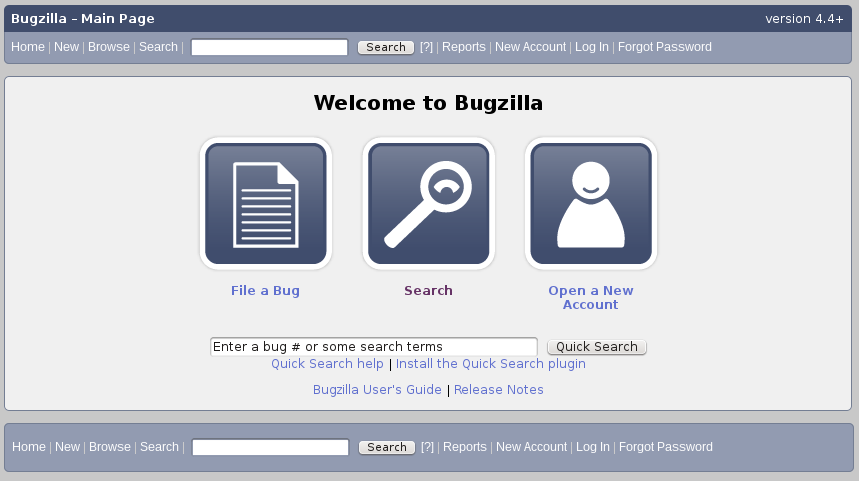
Developed to help programmers while working on various software projects, Bugzilla is a server solution that can monitor coding bugs in an efficient manner.
The Bugzilla application can also track code changes, offers you the possibility to send or review software patches, integrates QA tools, and can be used for efficient team communication.
For your convenience, the Bugzilla bug tracking system can be deployed on a server, and you get to access its console via any web browser. As a result, more than one developer can access the data, making the problem-solving process a lot more productive.
The best part is that you can use Bugzilla to keep track of all the code changes, and of the developers that performed the modification. The team members can use Bugzilla to communicate faster, and you might see an increase in the productivity level.
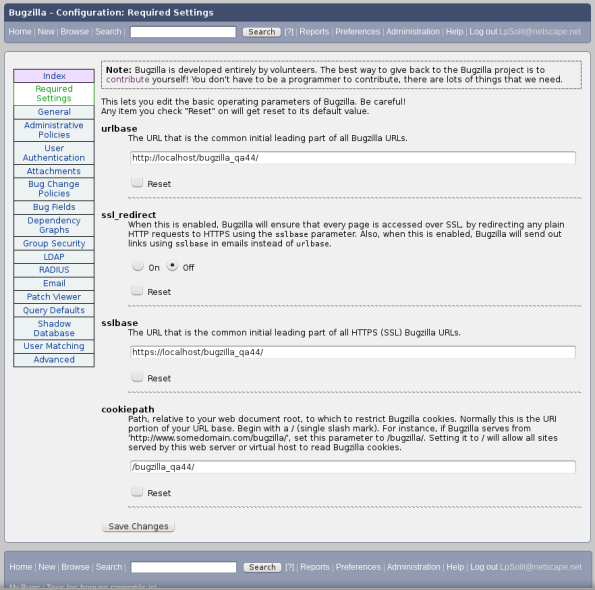
Within the Bugzilla system, you can query the database in order to find particular elements, and even set up personalized email alerts. You have the possibility to manage the user permissions or make use of the integrated request system.
The service allows you to control bug lists, to monitor the activity of specific members, to track the time spent on a precise task, to add attachments and comments, and so on. Based on all the gathered data, Bugzilla can automatically generate reports that are shared by email.
To conclude, Bugzilla has all it needs to help you monitor software bugs and your team’s activity while trying to find solutions.
Since the system ensures accountability and encourages efficient communication between developers, Bugzilla can help you raise the projects’ quality, while reducing the development time.
What's new in Bugzilla 5.0.6:
- This release contains a schema change to the flagtypes table, allowing for many more flagtypes.
- The flagtypes table should have been using a mediumint for several releases, but due to a bug in the schema migration code this never happened.
Bugzilla 5.0.6 / 5.1.2 Development
add to watchlist add to download basket send us an update REPORT- runs on:
- Mac OS X (-)
- file size:
- 4 MB
- filename:
- bugzilla-5.0.6.tar.gz
- main category:
- Developer Tools
- developer:
- visit homepage
Zoom Client
ShareX
7-Zip
Microsoft Teams
4k Video Downloader

IrfanView
Windows Sandbox Launcher
Context Menu Manager
Bitdefender Antivirus Free

calibre
- Context Menu Manager
- Bitdefender Antivirus Free
- calibre
- Zoom Client
- ShareX
- 7-Zip
- Microsoft Teams
- 4k Video Downloader
- IrfanView
- Windows Sandbox Launcher
