
Enables Android application developers to implement part of their application using various native-code languages such as C++ and C #Companion tool #Native code #Develop application #Companion #Develop #Code
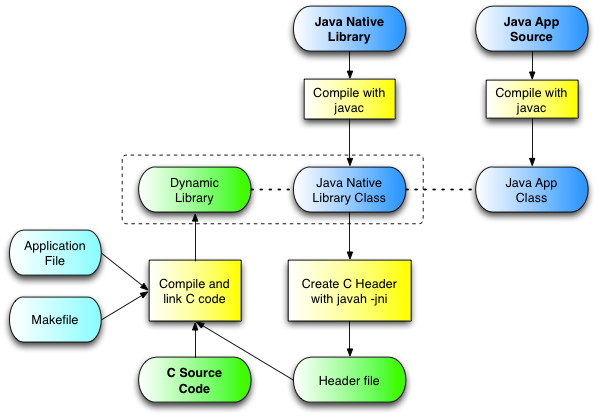
Android NDK is a comprehensive toolset specially made to help developers build parts of their Android applications by using native-code languages like C and C++.
With the help of Android Native Development Kit, you’ll be able to reuse existing code libraries written in one of the above mentioned languages in the case of certain application types.
It is worth mentioning that Android NDK is a set of companion tools for the Android SDK and that the NDK will not benefit most applications. In other words, you, as a developer, need to understand and asses its advantages, as well as its drawbacks.
By using native code on Android might not result in noteworthy performance improvements, however, it could help you expand your app and increase its complexity. It is recommended to use the NDK only if it is indispensable to your application and because you rather program in C/C++.
Android NDK is intended to be used for CPU-intensive workloads and, as a result, it is suitable for game engines, physics simulation, signal processing and other resource consuming apps.
The Android NDK package comes with a set of tools and build files that can be used to generate native code libraries from C++ and C sources.
Android NDK provides a way to embed the corresponding native libraries into APKS (application package files, that can be developed on Android devices. You also have access to a set of system headers and libraries that will be supported in all future versions of the Android platform.
Moreover, Android NDK also offers a couple of samples, documentation, as well as tutorials to help you get started.
What's new in Android NDK R26d:
- Issue 1994: Fixed ndk-gdb/ndk-lldb to use the correct path for make and other tools.
Android NDK R26d
add to watchlist add to download basket send us an update REPORT- runs on:
- macOS (Intel only)
- file size:
- 1.7 GB
- main category:
- Developer Tools
- developer:
- visit homepage
Windows Sandbox Launcher
Microsoft Teams
Zoom Client
Context Menu Manager
IrfanView
7-Zip
Bitdefender Antivirus Free
ShareX
calibre
4k Video Downloader
- ShareX
- calibre
- 4k Video Downloader
- Windows Sandbox Launcher
- Microsoft Teams
- Zoom Client
- Context Menu Manager
- IrfanView
- 7-Zip
- Bitdefender Antivirus Free