
Fastest open source messaging ever. #Network library #Concurrency framework #Messaging framework #Messaging #Network #Concurrency
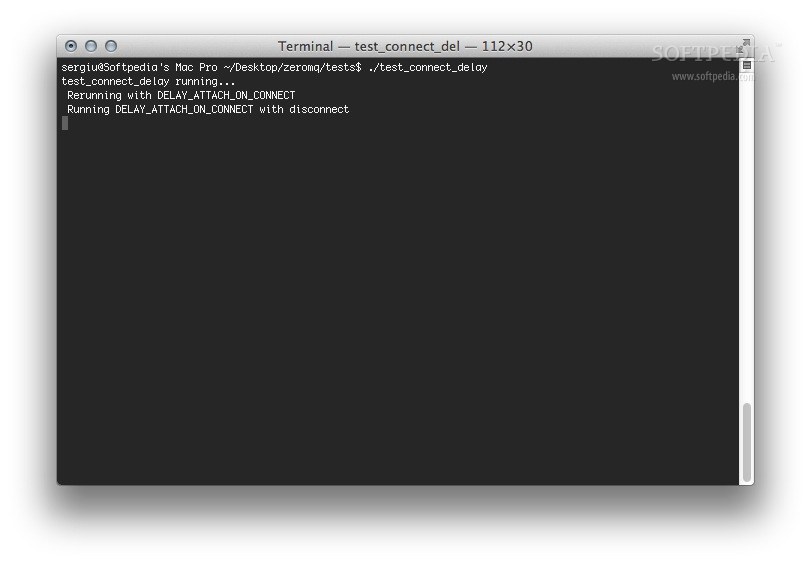
ØMQ (also seen as ZeroMQ, 0MQ, zmq) looks like an embeddable networking library but acts like a concurrency framework.
ØMQ gives you sockets that carry atomic messages across various transports like in-process, inter-process, TCP, and multicast.
You can connect sockets N-to-N with patterns like fanout, pub-sub, task distribution, and request-reply. It's fast enough to be the fabric for clustered products.
Its asynchronous I/O model gives you scalable multicore applications, built as asynchronous message-processing tasks. ØMQ has a score of language APIs and runs on most operating systems.
ØMQ comes with the low-level C API. High-level bindings exist in 40+ languages including Python, Java, PHP, Ruby, C, C++, C#, Erlang, Perl, and more.
ØMQ is very fast because it's already getting 30 micro-seconds end-to-end latencies and over 3 million messages a second today.
ØMQ is intended to be POSIX compliant and is compatible with the following platforms: · Mac OS X (tested on 10.5) · Linux (tested on Debian 4.0, Ubuntu 8.0.4) · FreeBSD (tested on 5.5 release) · Solaris (tested on 8, 10)
System requirements
What's new in ØMQ 4.1.5:
- Fixed #1723 - Family is not set when resolving NIC on Android.
- Fixed #1806 - uninitialised read in curve getsockopt.
- Fixed #1807 - build broken with GCC 6.
- Fixed #1831 - potential assertion failure with latest libsodium.
ØMQ 4.1.5
add to watchlist add to download basket send us an update REPORT- runs on:
- Mac OS X (-)
- file size:
- 795 KB
- filename:
- zeromq-4.1.5.tar.gz
- main category:
- Communications
- developer:
- visit homepage
Bitdefender Antivirus Free
calibre
4k Video Downloader

Microsoft Teams
ShareX
Zoom Client
Context Menu Manager
7-Zip
IrfanView
Windows Sandbox Launcher
- 7-Zip
- IrfanView
- Windows Sandbox Launcher
- Bitdefender Antivirus Free
- calibre
- 4k Video Downloader
- Microsoft Teams
- ShareX
- Zoom Client
- Context Menu Manager