
Easy to use piano emulator for macOS that places a realistic piano model on your desktop and can help you create your own music.. #Play piano #Piano player #Listen piano #Piano #Player #Music
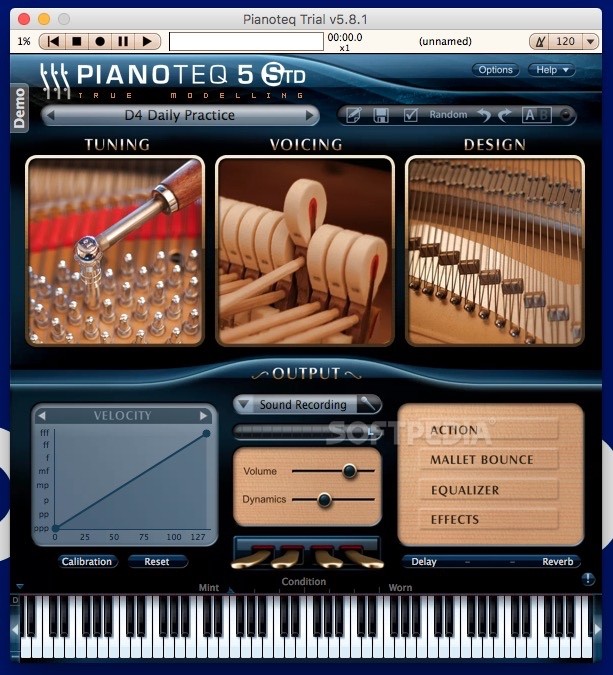
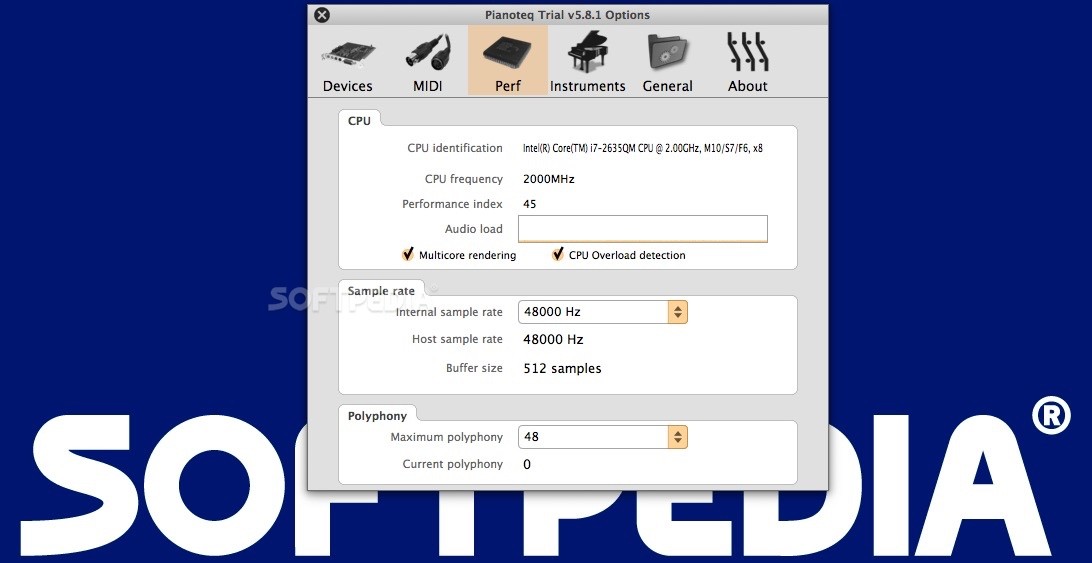
Pianoteq is a full-featured multi-platform piano emulator which offers you the possibility to experience the sound of different piano models from the comfort of your on Mac computer.
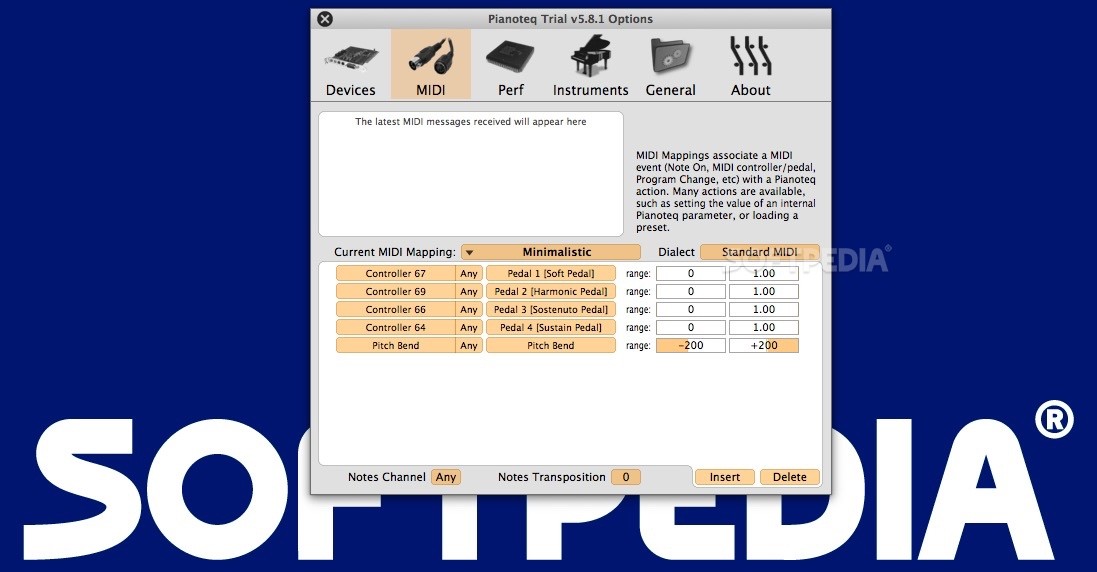
The Pianoteq application simulates the properties, behavior, and sound effects of physical pianos, and enables you to make use of your Mac’s keyboard, or you can connect a MIDI keyboard.
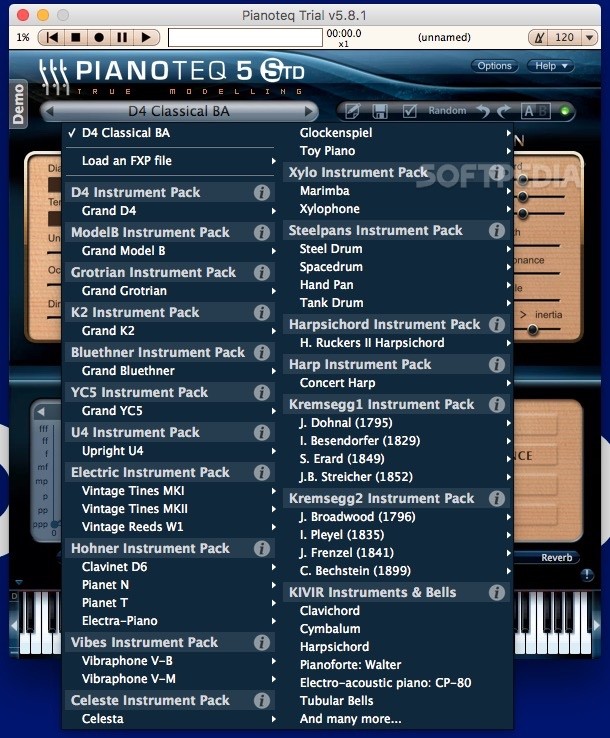
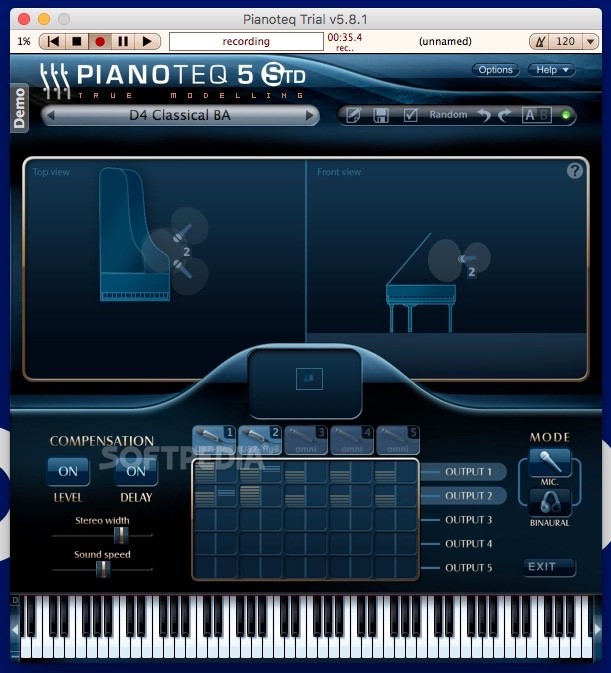
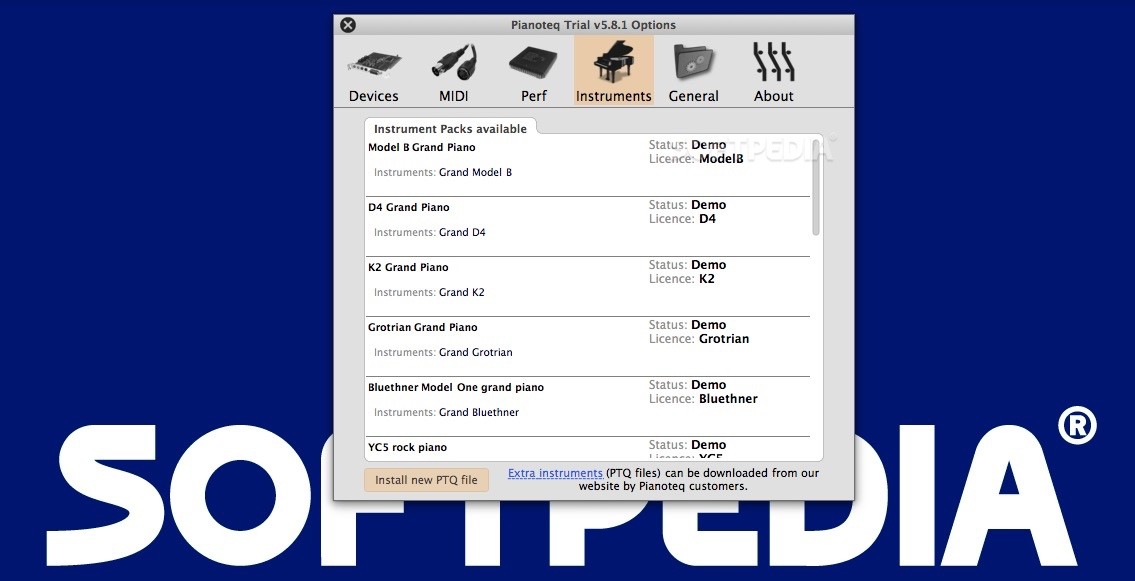
Pianoteq comes with a collection of instruments that are organized by type: D4, K2, Bluethner, YC5, U4, electric, clavinet, vibes, celeste, xylo, steelpans, Kremsegg, or KIVIR. Via a simple drop down panel you can browse the collection and choose the model you want to employ.
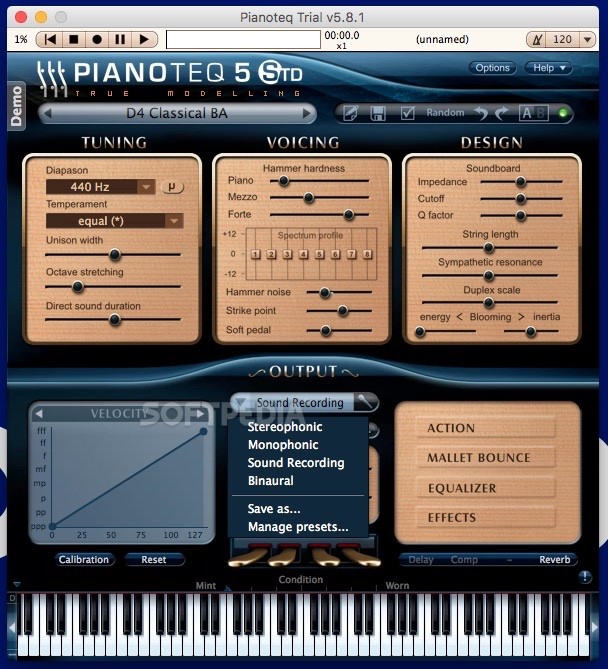
Moreover, in the app’s main window you can choose to tune the sound duration, octave stretching, unison width, diapason, or temperament. The same area allows you adjust the hammer hardness, or the soundboard design.
All these parameters offer you the possibility to give a custom shape to the sound, which makes the Pianoteq app extremely versatile. The utility can apply different predefined effects, while the built-in equalizer enables you to utilize familiar filters.
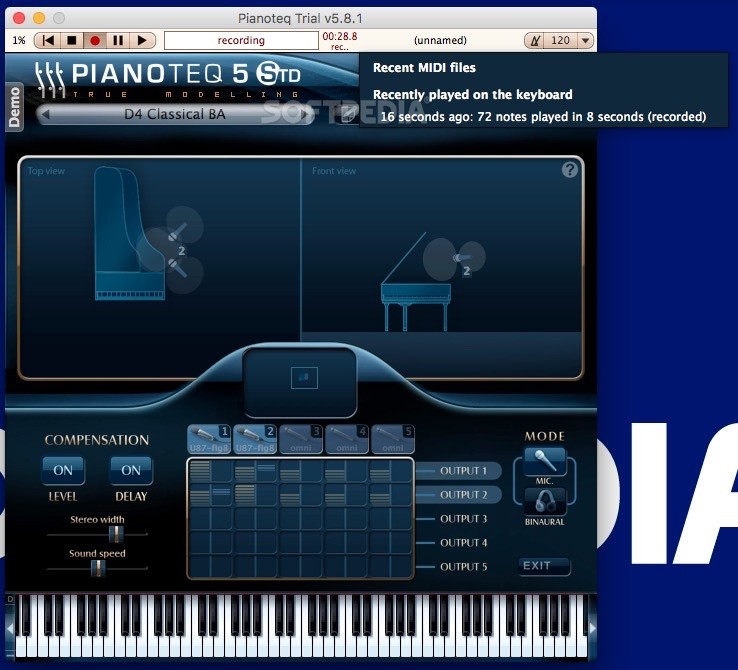
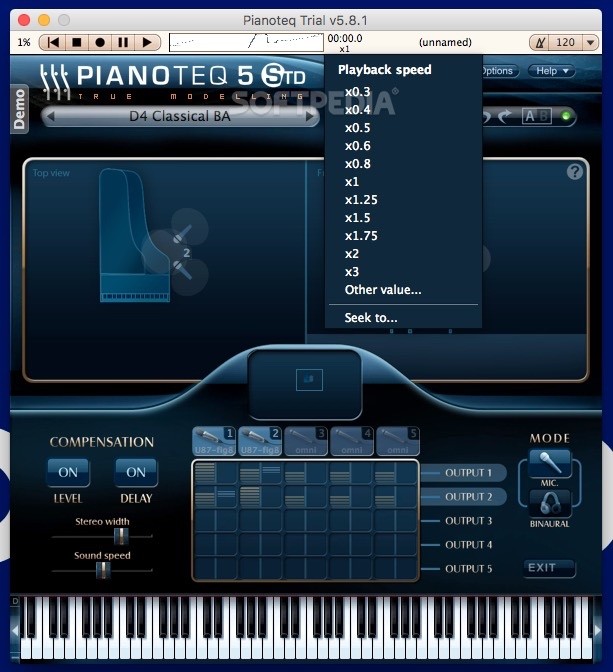
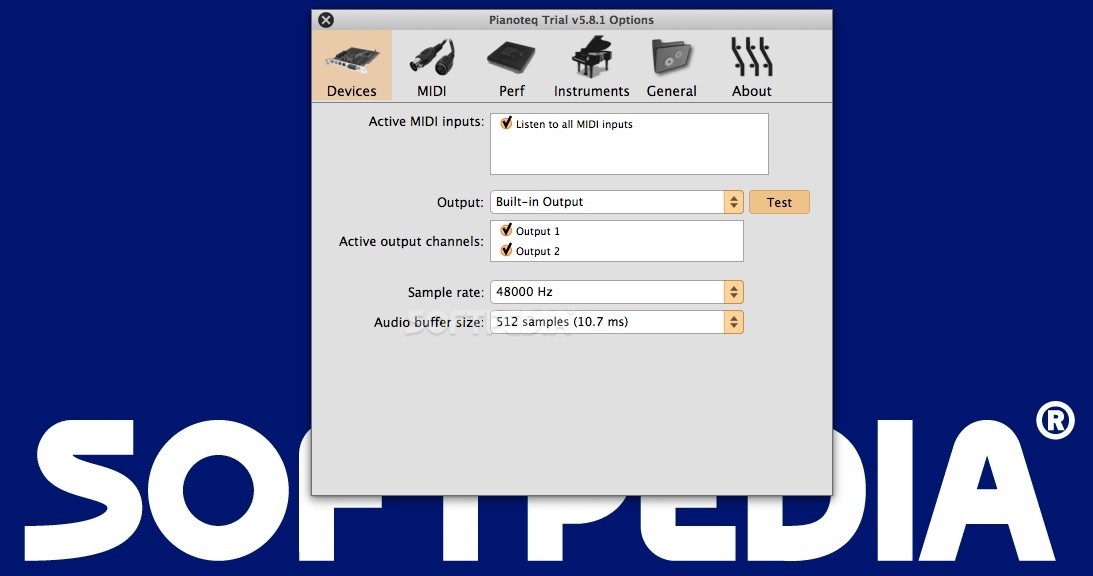
Pianoteq offers you the possibility to output the sound directly in binaural, monophonic, or stereophonic mode, but can also record your compositions. In the latter case, Pianoteq even allows you to move up to 5 different microphones around the virtual instrument, just like a sound engineer would do in a real recording studio.
To conclude, if you want to simulate working with different types of instruments in a professional styled recording environment, Pianoteq can emulate the experience. Moreover, the app can help you adjust a wide collection of parameters in order to achieve the sound quality and vibe you were looking for.
Download Hubs
Pianoteq is part of these download collections: Piano Managers
What's new in Pianoteq 8.2.2:
- Fix microtuning with the VST3 plugin in Dorico.
Pianoteq 8.2.2
add to watchlist add to download basket send us an update REPORT- runs on:
- macOS 10.7 or later (Universal Binary)
- file size:
- 49.1 MB
- filename:
- pianoteq_trial_v822.dmg
- main category:
- Audio
- developer:
- visit homepage
ShareX
calibre
7-Zip
IrfanView
Microsoft Teams
Windows Sandbox Launcher
Bitdefender Antivirus Free

4k Video Downloader

Zoom Client
Context Menu Manager
- 4k Video Downloader
- Zoom Client
- Context Menu Manager
- ShareX
- calibre
- 7-Zip
- IrfanView
- Microsoft Teams
- Windows Sandbox Launcher
- Bitdefender Antivirus Free